How Amazon's AI-Powered Search Is Changing Product Discovery
For years, Amazon search was largely built around a simple process: shoppers entered keywords, Amazon matched those terms with product listings, and its search algorithm ranked the most relevant products. Today, Amazon AI-powered search is changing this process by helping the platform understand shopper intent, context, and the meaning behind search queries. This keyword-driven approach previously made Amazon SEO heavily dependent on product titles, bullet points, descriptions, categories, and other listing signals.
But online shopping is becoming more conversational and context-driven. Shoppers no longer want to figure out the exact keywords needed to find the right product. Instead, they expect Amazon to understand what they mean, what they need, and even why they are searching.
This shift is being driven by artificial intelligence. Amazon is increasingly using AI to understand shopper intent, interpret natural-language queries, summarize product information, and help consumers discover products that may not have appeared through traditional keyword matching alone. One of the most visible examples is Amazon Rufus, Amazon's generative AI shopping assistant designed to help customers research products and make purchasing decisions.
For brands and sellers, this represents a major change. Amazon AI-powered search is moving product discovery beyond simple keyword matching toward a system that considers intent, context, product attributes, and the shopper's broader needs.
The result is a new Amazon search environment where optimizing for keywords alone may no longer be enough. Brands increasingly need to make their product information clear, relevant, comprehensive, and useful for both shoppers and AI-driven discovery.
How Amazon's AI-Powered Search Works
Amazon's AI-powered search is designed to understand more than the individual keywords entered by a shopper. Instead of treating a search query as a collection of separate terms, AI can analyze the meaning behind the query, identify the shopper's intent, and connect that intent with relevant product information. This makes Amazon AI search more capable of handling the way people naturally describe what they want.
Natural-Language Understanding and Search Intent
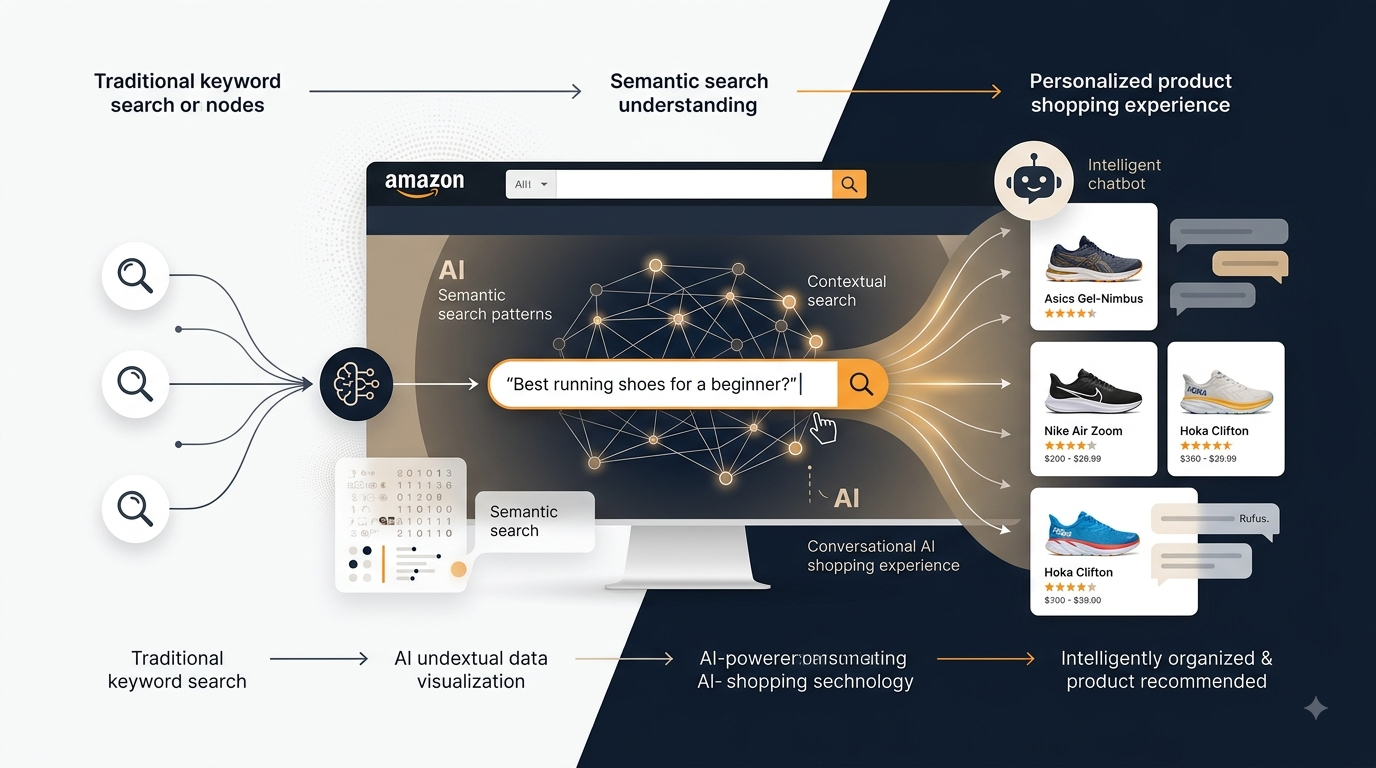
A major part of this shift is natural-language understanding. Traditional Amazon search might rely heavily on matching words in a query with information contained in product listings. AI-driven search can interpret conversational phrases and determine what the shopper is actually trying to accomplish. For example, a shopper searching for "running shoes men" is providing only basic information about the product category. An AI-driven query such as "What are good running shoes for a beginner who runs 5 miles three times a week?" provides much more context.
The second query requires Amazon to understand several factors, including the shopper's experience level, running frequency, distance, and intended use. The system can then connect those requirements with product characteristics such as cushioning, durability, stability, comfort, and suitability for running.
Context, Product Data, and Shopping Signals
AI can also consider contextual relevance by connecting a shopper's query with product attributes and catalog data. Information such as product specifications, materials, sizes, features, compatibility, and intended use can help determine whether a product fits a particular search. This makes the quality and completeness of product information increasingly important for Amazon product discovery.
Customer behavior and shopping signals can also contribute to how products are discovered. Interactions such as searches, clicks, product views, purchases, and other shopping activity can provide signals about relevance and preferences. When AI analyzes these signals, Amazon can create more personalized shopping experiences by presenting products that better match each customer's interests, preferences, and needs.
From Keywords to Conversational Shopping
The biggest change is that shoppers can increasingly interact with Amazon using conversational queries rather than carefully constructed keyword phrases. Instead of asking only "running shoes men," customers can describe their situation, preferences, budget, or intended use in a single question. This creates a more natural discovery process and allows AI to connect shopper intent with relevant products.
For sellers and brands, this means Amazon SEO is becoming broader than keyword placement. Product listings need to clearly communicate what a product is, who it is for, what problems it solves, and how its features support specific use cases. As AI becomes more involved in search and shopping experiences, the ability of Amazon's systems to understand this context can play an increasingly important role in determining how customers discover products.
Amazon Rufus: Turning Search Into a Shopping Conversation
Amazon Rufus represents one of the clearest examples of how AI is changing the way consumers discover products on Amazon. Rather than requiring shoppers to rely entirely on traditional search results, Rufus is designed to provide a more conversational shopping experience. It allows customers to ask questions about products, categories, features, and purchasing considerations using natural language, making product research feel more like a conversation than a conventional search.
From Search Queries to Shopping Questions
Traditional Amazon search generally starts with a keyword or short phrase. A shopper searching for "best coffee maker," for example, may receive a broad selection of products based on the query and Amazon's ranking systems. However, the shopper may still need to compare specifications, read reviews, check product details, and determine which model actually fits their needs.
With Rufus, the shopper can provide more specific requirements by asking, "What's a good coffee maker for a small apartment that's easy to clean?" This question gives the AI additional context about the customer's situation. Instead of focusing only on the product category, the shopping experience can consider factors such as size, convenience, cleaning requirements, and suitability for a particular living environment.
Rufus can also support product comparisons and recommendations by helping shoppers evaluate different options according to their needs. Customers can ask follow-up questions rather than starting a completely new search each time. For example, after exploring coffee makers, a shopper could ask which option is easier to clean or which one is better suited for making coffee for two people.
A More Conversational Product Discovery Experience
This conversational approach changes Amazon product discovery because shoppers can explain what they want instead of knowing exactly which keywords to use. The AI can help narrow a broad category into products that better match specific requirements, preferences, and use cases.
For brands and sellers, this creates a new consideration for Amazon SEO. Product information needs to be detailed and easy to understand so AI systems can connect products with real-world customer needs. Features, benefits, specifications, use cases, and limitations provide valuable context that helps Amazon understand products and surface them for relevant searches in an increasingly AI-driven shopping environment.
From Keywords to Search Intent: What Changes for Sellers?
For years, Amazon SEO has focused heavily on identifying valuable keywords and placing them strategically throughout a product listing. Sellers typically looked at search volume, competition, exact and related keywords, product titles, bullet points, descriptions, backend search terms, and ranking performance. The objective was straightforward: identify the phrases shoppers use and optimize the listing so Amazon's search algorithm can match the product with those searches.
AI-driven discovery changes the question sellers need to ask. Instead of focusing only on which keyword can generate visibility, sellers increasingly need to understand the search intent behind that keyword. AI can interpret the meaning and context of a shopper's query, making semantic relevance and product information increasingly important.
For example, a seller targeting the keyword "office chair" may optimize a listing around that phrase. However, shoppers may search for products using much more specific language, such as "comfortable office chair for working eight hours a day" or "ergonomic chair for lower back support." These queries communicate a problem or use case, not simply a product category.
This means sellers should consider product attributes, customer questions, use cases, benefits, and natural-language descriptions when developing their listings. A strong product page should clearly explain what the product does, who it is designed for, which needs it addresses, and how its features benefit the customer.
The key shift is from asking, "What keyword should I rank for?" to asking, "What problem is the shopper trying to solve?"
Keywords still matter, but they are becoming part of a broader strategy focused on relevance, context, and customer intent. Sellers that understand these factors can create product information that is useful not only for traditional search but also for increasingly AI-driven Amazon product discovery.
How Amazon AI-Powered Search Is Changing Product Listings
As Amazon's search experience becomes more dependent on artificial intelligence, product listings need to do more than contain relevant keywords. They need to provide clear, useful, and comprehensive information that helps both shoppers and AI systems understand what a product is, who it is designed for, and when it should be considered. This makes product content an increasingly important part of Amazon AI search and product discovery.
Product Titles
Product titles should clearly identify the product while highlighting its most important attributes. Instead of trying to include as many keywords as possible, sellers should prioritize clarity and relevance. Important characteristics such as product type, size, material, compatibility, quantity, or key functionality can help customers quickly understand what they are looking at. Avoiding keyword stuffing is particularly important because a title written primarily for search engines can become difficult for customers to read and understand.
Bullet Points
Bullet points should combine product features with customer benefits and practical use cases. Rather than simply stating that a product has a particular feature, sellers can explain how that feature helps solve a customer's problem. For example, instead of only mentioning "stainless steel construction," a listing could explain that the material provides durability and makes the product easier to maintain. This creates additional context that can help both shoppers and AI systems interpret the product.
Product Descriptions
Product descriptions should use natural language to explain the product in greater detail. They can provide contextual information about how the product works, where it can be used, its key characteristics, and which types of customers may benefit from it. Detailed and accurate product information gives AI systems more context when determining relevance for conversational and intent-based queries.
A+ Content
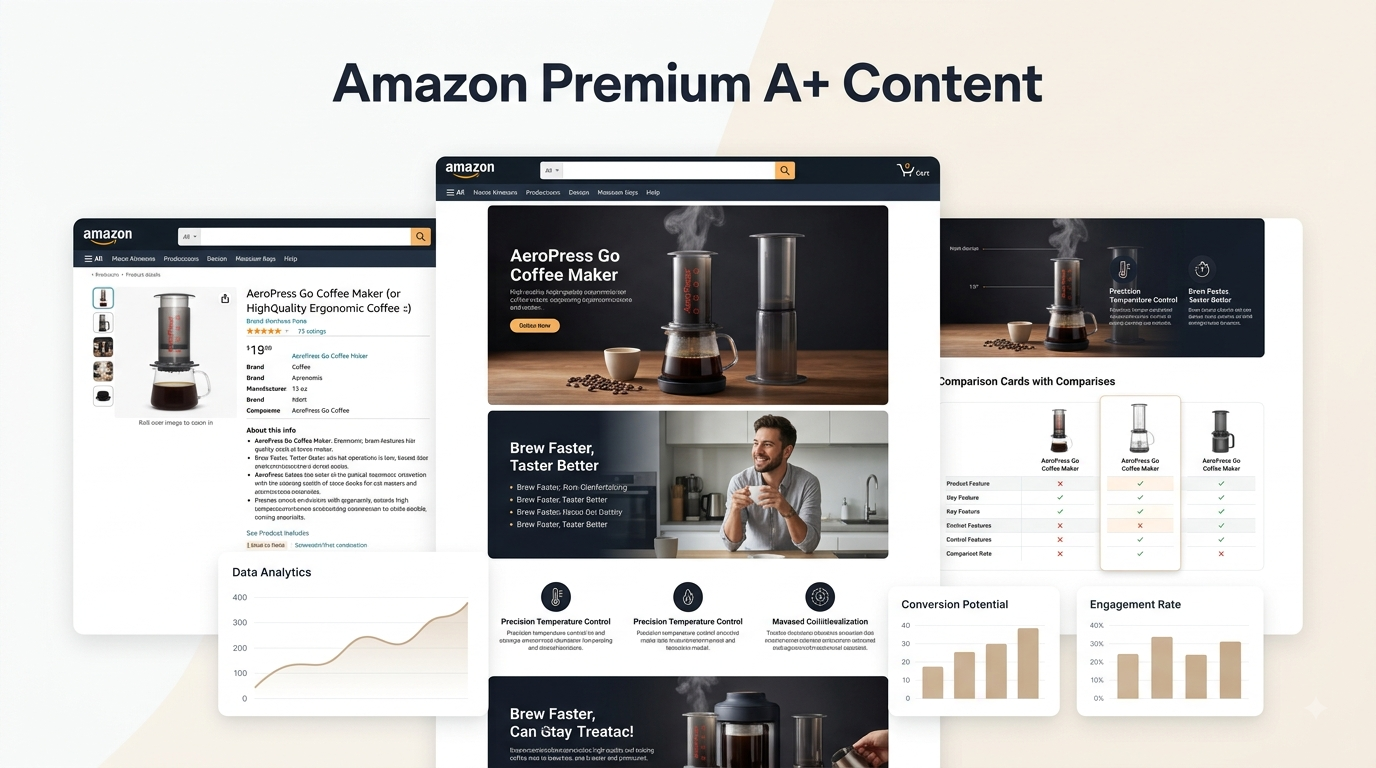
A+ Content can strengthen this information through visual storytelling, product education, comparisons, and use-case explanations. While visual elements are primarily designed to improve the customer experience, well-structured educational content can also provide additional context about the product and its benefits.
Ultimately, Amazon listings should be written for both shoppers and AI systems. The goal is no longer simply to place keywords throughout a page, but to create clear, informative content that communicates product value and answers the questions customers are likely to ask.
The Role of Product Data in AI-Powered Discovery
Accurate and detailed product data is becoming increasingly important as AI plays a larger role in Amazon product discovery. AI systems need reliable information to understand what a product is, what it does, who it is intended for, and how it compares with other products. If product information is incomplete, vague, or inconsistent, it becomes harder to establish the contextual relevance needed for AI-powered search.
Product attributes such as size, material, color, compatibility, specifications, intended use, category, and product variations provide important context. These details help distinguish products that may appear similar but serve very different customer needs. Accurate information can also make it easier for AI systems to connect a product with specific natural-language queries.
For example, a listing that simply describes a product as a "premium kitchen organizer" provides relatively little information. A more specific description such as "bamboo countertop spice rack with 3 tiers, designed for small kitchens" communicates several important characteristics at once. It identifies the material, product type, structure, placement, and intended use.
This additional context can help Amazon's AI-powered systems better understand where the product fits within a shopper's search. A customer looking for a compact spice-storage solution for a small kitchen has a much clearer connection to the second description.
For sellers, this means product data should be treated as more than catalog information. It is a foundation for helping AI understand product relevance. The more accurate, complete, and specific the information is, the better positioned a product may be to participate in increasingly contextual and conversational Amazon AI search experiences.
What AI Search Means for Amazon Rankings and Visibility
The rise of AI-powered search does not mean that Amazon's existing ranking system has been completely replaced. Traditional search signals such as keyword relevance, product performance, sales, and conversion remain important. However, AI is becoming another layer in the shopping experience, influencing how Amazon understands queries, evaluates product relevance, and helps customers discover and compare products.
One important change is that relevance can extend beyond exact or closely related keyword matches. AI can interpret the meaning and context of a shopper's query and connect it with product information that addresses the underlying need. This creates opportunities for products to be discovered based on their attributes, use cases, and overall relevance rather than simply matching a specific phrase.
Product quality and customer response also remain important considerations. Signals such as conversion performance, customer reviews, engagement, and historical sales performance can provide information about how shoppers respond to a product. High-quality product information can further help Amazon understand the product and determine where it may be relevant.
For example, a product with clear specifications, strong customer feedback, useful content, and consistent sales performance may provide Amazon with a stronger overall understanding of its value and relevance than a listing that relies heavily on keyword placement but provides limited information.
As AI becomes more integrated into Amazon's shopping experience, Amazon may increasingly surface products through conversational recommendations, personalized results, product comparisons, and intent-based discovery. This does not eliminate traditional Amazon SEO, but it broadens what sellers need to consider.
The focus is shifting from optimizing for visibility through keywords alone toward building products and listings that are relevant, informative, engaging, and capable of converting shoppers.
AI-Powered Search and Amazon Advertising
AI-powered search is also changing the way brands should think about Amazon advertising. As Amazon becomes better at understanding shopper intent, advertisers have an opportunity to look beyond individual keywords and consider the broader needs and behaviors behind customer searches. This can make the relationship between organic product discovery and paid advertising increasingly important.
Traditional PPC strategies often focus heavily on keyword targeting, search volume, bids, and campaign performance. While these fundamentals remain important, AI-driven shopping experiences can introduce more sophisticated forms of intent-based discovery. A shopper may use different words to describe the same need, meaning brands need to understand the problems, preferences, and use cases connecting those searches.
Sponsored Products and Sponsored Brands can continue to provide paid visibility, while search-term analysis can help brands identify how customers actually describe their needs. These insights can then be used to improve product titles, bullet points, descriptions, targeting strategies, and campaign structures. For example, if search-term data consistently reveals customers looking for a specific product use case, brands can incorporate that insight into both their listing content and advertising strategy.
This creates a stronger connection between organic and paid visibility. Instead of treating Amazon SEO and Amazon PPC as completely separate strategies, brands can use information from both areas to understand customer demand and improve product discovery.
As AI makes Amazon search more contextual, successful brands will increasingly need an integrated approach. Organic content can help establish relevance and provide product information, while advertising can generate visibility and valuable customer search insights. Together, these strategies can create a more complete approach to reaching shoppers throughout the Amazon buying journey.
How Brands Can Optimize for AI-Powered Product Discovery
As Amazon's search experience becomes more AI-driven, brands need a broader approach to optimization. The goal is not simply to add more keywords to a listing, but to provide the information and context needed to connect products with relevant customer needs. The following framework can help brands prepare for the changing landscape of Amazon AI-powered search.
Build Intent-Focused Product Listings
Start by understanding why customers buy the product. Identify the problems they are trying to solve, the situations in which they use the product, and the benefits they value most. Use these insights to create listings that communicate clear use cases rather than focusing only on product features.
Use Natural Language
Write product content in the language customers actually use. Consider the questions shoppers might ask before purchasing and make sure titles, bullet points, and descriptions provide clear answers. Natural, informative content can provide more context than repetitive keyword placement.
Strengthen Product Attributes
Make product information detailed, accurate, and consistent. Include relevant specifications such as size, material, color, compatibility, capacity, dimensions, and intended use. Strong product data gives Amazon more information to understand the product and match it with relevant searches.
Answer Customer Questions
Reviews, customer Q&A, and support interactions can reveal recurring concerns and questions. Brands should use these insights to identify information gaps and update their listings accordingly.
Improve Reviews and Customer Experience
Reviews provide more than a star rating. Recurring comments can reveal what customers like, dislike, or misunderstand about a product. Identifying these patterns can help brands improve both their product experience and listing content.
Use Amazon Analytics
Track search terms, traffic, conversions, sales, and product performance to understand how customers discover and respond to products. These insights can inform both Amazon SEO and advertising decisions.
Continuously Test and Optimize
AI-driven product discovery will continue evolving. Brands should regularly test their content, monitor customer behavior, analyze performance, and update their listings as new search patterns and customer expectations emerge.
The Future of Amazon AI-Powered Product Discovery
The future of Amazon product discovery is likely to become increasingly conversational, personalized, and guided by artificial intelligence. Instead of relying primarily on short keyword searches and manually browsing through large numbers of products, shoppers may increasingly describe what they need and allow AI to help narrow down the available options.
AI-generated recommendations could become more sophisticated by considering a shopper's requirements, preferences, previous interactions, and product characteristics. AI-assisted comparisons may also make it easier for customers to evaluate multiple products based on factors that matter to them, such as price, features, size, compatibility, or intended use.
As this happens, structured and accurate product data will become increasingly important. AI systems need reliable information to understand product characteristics and determine which products are relevant to specific customer needs. Search may also become less dependent on short keyword queries as shoppers become more comfortable asking detailed, conversational questions.
AI shopping assistants could eventually become a more integrated part of the entire buying journey, helping customers move from identifying a need to researching, comparing, and selecting a product.
The traditional Amazon shopping journey can be described as:
Search → Browse → Compare → Buy
The emerging AI-driven experience may increasingly look like:
Ask → Discover → Evaluate → Buy
For brands, this shift means successful product discovery will depend not only on keyword rankings but also on how well Amazon's AI understands the product and matches it with relevant customer needs and shopping queries.
Conclusion — Brands Need to Optimize for Intent, Not Just Keywords
Amazon search is becoming more intelligent, contextual, and conversational. As AI plays a larger role in the shopping experience, customers can increasingly describe their needs in natural language and receive product recommendations based on context and intent rather than relying only on short keyword queries.
Amazon Rufus represents an important step toward this conversational approach to commerce, helping shoppers research products, explore options, and evaluate products according to specific requirements. For sellers and brands, this makes accurate product data and useful, informative content more important than ever.
Keyword optimization still matters, but it is becoming one part of a broader Amazon SEO strategy. Semantic relevance, customer intent, product information, engagement, and overall shopping experience are increasingly important factors in product discovery.
Brands that adapt early can be better positioned as Amazon's search and advertising ecosystem continues to evolve. By combining strong listings, accurate product data, customer insights, and performance analysis, businesses can build a more effective approach to modern Amazon discovery.
For brands looking to navigate these changes, PDMG can help analyze Amazon performance, strengthen product listings, understand search behavior, and develop strategies designed to improve visibility and connect products with the customers most likely to buy.