From Beginner to Brand Registered: A 2026 Step-by-Step Amazon Seller Launch Guide
Introduction
Selling on Amazon is no longer just a side hustle—it’s a scalable, full-fledged business model in 2026. With millions of active buyers and global reach, Amazon gives beginners a powerful platform to build and grow a brand from scratch. However, many new sellers jump in without a clear roadmap and quickly face challenges like account suspensions, poor product selection, or lack of brand protection.
In fact, most beginners fail not because Amazon is difficult, but because they skip the foundational steps. Therefore, having a structured approach is crucial if you want to succeed in today’s competitive marketplace.
This Amazon Seller Launch Guide 2026 is designed to take you from complete beginner to a fully brand-registered seller—step by step. You’ll learn how to set up your seller account correctly, validate profitable products, secure your brand with a trademark, and unlock Amazon Brand Registry.
By the end of this guide, you won’t just be another seller—you’ll be building a scalable, protected Amazon business with long-term potential.
Step 1 – Understanding the Amazon Seller Ecosystem in 2026
Before you start selling, it’s important to understand how the Amazon ecosystem works. This foundation will help you avoid confusion and make smarter decisions as you move forward in this Amazon selling guide 2026.
What is Amazon Marketplace?
Amazon Marketplace is a platform where third-party sellers list and sell products directly to customers. Instead of Amazon owning all inventory, individuals and businesses can create their own listings and leverage Amazon’s massive customer base. In simple terms, Amazon acts as the bridge between you (the seller) and millions of buyers worldwide.
FBA vs FBM (Simple Explanation)
There are two main ways to fulfill orders on Amazon:
- FBA (Fulfillment by Amazon): You send your products to Amazon warehouses, and Amazon handles storage, packaging, shipping, and customer service. This is ideal for beginners who want automation and scalability.
- FBM (Fulfillment by Merchant): You handle storage, shipping, and customer service yourself. This gives more control but requires more effort and logistics management.
Most beginners start with FBA because it simplifies operations and increases chances of winning the Buy Box.
Why Branding Matters More Than Ever
In 2026, selling generic products is no longer enough. Customers trust brands, not random listings. Therefore, building a recognizable brand helps you stand out, increase conversions, and protect your business from copycats. Branding also unlocks tools like enhanced content and brand analytics once you’re registered.
Latest 2026 Trends You Must Know
- Private Label Dominance: Sellers are focusing on creating their own branded products instead of reselling others. This ensures higher margins and long-term growth.
- AI-Based Product Research: Tools powered by AI are helping sellers identify profitable products faster with data-driven insights.
- Brand-First Strategy: Successful sellers now think like brand owners from day one—focusing on packaging, storytelling, and customer experience rather than just selling products.
Understanding these fundamentals sets the stage for building a strong and scalable Amazon business in 2026.
Step 2 – Creating Your Amazon Seller Account (Beginner Setup in Amazon Seller Launch Guide 2026)
Setting up your Amazon seller account is the first real step toward building your online business. However, this is also where many beginners make critical mistakes that can lead to delays or even account suspension. Therefore, following the right process from the start is essential in this Amazon Seller Launch Guide 2026.
Documents Required for Amazon Seller Account (Amazon selling guide 2026 basics)
To register as a seller, Amazon requires a few essential documents for identity and tax verification. You’ll need your PAN card, which is mandatory for tax purposes in India, along with a valid GST number if you plan to sell taxable products. In addition, a bank account in your name is required to receive payments from Amazon.
You must also provide a working email address and phone number for verification and communication. It’s important that all details across these documents match exactly. Even a small mismatch in name or address can delay approval or trigger verification issues. In fact, many beginners get stuck at this stage due to inconsistent information.
Individual vs Professional Account (Amazon Seller Launch Guide 2026 decision)
Amazon offers two types of seller accounts—Individual and Professional—and choosing the right one depends on your goals. The Individual plan has no monthly subscription fee, but Amazon charges a per-sale fee, making it suitable for those just testing the platform.
On the other hand, the Professional plan comes with a fixed monthly fee but removes per-item charges and unlocks advanced features like bulk listing, advertising, and detailed reports. Therefore, if you’re serious about building a long-term business and scaling products, upgrading to a Professional account early is a smart move.
Common Mistakes to Avoid During Setup (Amazon selling guide 2026 tips)
Many beginners unknowingly make mistakes during account setup that can cause long-term issues. One of the most common problems is mismatched documents, where the name on the PAN card, bank account, or GST doesn’t align perfectly.
Another major mistake is creating multiple seller accounts without approval from Amazon. This is strictly against Amazon’s policies and often leads to permanent suspension. Additionally, using fake or incorrect information might seem like a shortcut, but it almost always results in account deactivation during verification checks.
Therefore, it’s crucial to be honest, accurate, and consistent while setting up your account. A clean and properly verified account sets the foundation for everything you’ll build next in your Amazon journey.
Step 3 – Product Research That Actually Works in 2026
Product research is the backbone of your Amazon business. However, most beginners either pick products based on guesswork or blindly follow trends, which often leads to failure. In this Amazon Seller Launch Guide 2026, you’ll learn how to approach product research strategically using data, not emotions.
How to Find Winning Products (Amazon selling guide 2026 strategy)
A winning product typically has low competition and high demand. This means people are actively searching for it, but there aren’t too many strong sellers dominating the market. Therefore, your goal should be to find gaps where you can enter and compete effectively.
Avoid highly saturated categories like generic phone accessories or basic kitchen items unless you have strong differentiation. Instead, look for niche products with consistent demand and room for branding. In fact, micro-niches are where most new sellers are winning in 2026.
Tools You Can Use (Amazon Seller Launch Guide 2026 resources)
To make smarter decisions, you should rely on product research tools instead of manual browsing. Two of the most popular tools are:
- Helium 10 – Offers keyword research, competitor analysis, and product tracking. (Suggested outbound link: Helium 10 official website)
- Jungle Scout – Helps estimate sales, analyze demand, and validate product ideas. (Suggested outbound link: Jungle Scout official website)
These tools use real data to help you identify opportunities, saving you time and reducing risk.
Product Validation Checklist (Amazon selling guide 2026 checklist)
Before finalizing any product, validate it using a simple checklist. First, check if the product has good search volume, which indicates demand. Then, analyze competitors—ideally, top listings should have less than 200 reviews, making it easier for you to compete.
Finally, focus on a price range between ₹800–₹3000. This range allows decent profit margins after Amazon fees and advertising costs. Therefore, combining demand, low competition, and healthy pricing ensures you’re selecting a product with real potential.
Strong product research sets the foundation for everything that follows—get this step right, and you’re already ahead of most beginners.
Step 4 – Sourcing Your Product (India + Global Options)
Once you’ve finalized your product, the next step is sourcing it efficiently. However, choosing the right supplier can make or break your Amazon journey. In this Amazon Seller Launch Guide 2026, sourcing isn’t just about finding the cheapest option—it’s about balancing cost, quality, and reliability.
Where to Source Products (Amazon selling guide 2026 sourcing options)
There are multiple sourcing options available depending on your budget and scale. Platforms like Alibaba are ideal for global sourcing, especially if you’re looking for manufacturers who can offer competitive pricing and customization. On the other hand, IndiaMART is a great option for sourcing within India, offering faster delivery and easier communication.
You can also explore local manufacturers in your city or nearby industrial areas. In fact, working with local suppliers gives you better control over quality, faster turnaround times, and easier negotiations. Therefore, beginners in India often benefit from starting locally before scaling globally.
Negotiation Tips (Amazon Seller Launch Guide 2026 strategy)
Negotiation is a crucial part of sourcing, and beginners often overlook this. Start by discussing the MOQ (Minimum Order Quantity)—many suppliers are willing to reduce it for first-time buyers if you negotiate properly.
Always request samples before placing a bulk order. This helps you verify product quality and avoid costly mistakes. Additionally, discuss private labeling options, such as adding your logo or custom packaging, even at smaller quantities.
In fact, building a good relationship with your supplier can lead to better pricing, priority production, and long-term benefits as you scale.
Branding Basics at This Stage (Amazon selling guide 2026 foundation)
Branding should start right from the sourcing stage—not after you launch. Begin with a simple logo that represents your brand identity. Then, focus on packaging, as it directly impacts customer perception and unboxing experience.
Finally, think about your brand story—why your product exists, who it’s for, and what problem it solves. Therefore, even before you list your product, you’re already building a brand, not just selling a generic item.
Getting sourcing and branding right at this stage gives you a strong competitive advantage in the Amazon marketplace.
Step 5 – Listing Optimization for Maximum Sales
Creating a product listing is not just about uploading details—it’s about converting visitors into buyers. However, many beginners underestimate the power of optimization. In this Amazon Seller Launch Guide 2026, your listing should be treated like a sales page designed to rank and convert.
Keyword Research for Amazon SEO (Amazon selling guide 2026 strategy)
Amazon is a search engine, and keywords determine whether your product gets discovered or ignored. Therefore, you must include your main keyword along with multiple long-tail keywords that reflect what customers are actually searching for.
For example, instead of targeting just “water bottle,” you can include variations like “insulated stainless steel water bottle 1L” or “leak-proof gym bottle.” In fact, long-tail keywords often bring more targeted traffic and higher conversions.
Make sure to naturally place these keywords in your title, bullet points, backend search terms, and even image alt attributes to improve visibility.
Writing High-Converting Listings (Amazon Seller Launch Guide 2026 essentials)
A high-converting listing clearly communicates value and builds trust. Your title should be keyword-rich while still readable and benefit-focused. Avoid keyword stuffing—clarity always wins.
Next, your bullet points should highlight key features and benefits. Focus on solving customer problems rather than just listing specifications. Each bullet should answer: “Why should I buy this?”
Finally, your description is where you tell your product’s story. Use simple language, explain use cases, and reinforce your brand identity. Therefore, a well-structured listing increases both ranking and conversion rate.
Importance of Images (Amazon selling guide 2026 conversion factor)
Images play a major role in influencing buying decisions. Start with a clean white background image that meets Amazon’s guidelines. Then, add lifestyle images showing the product in real-world use to help customers visualize it.
Include infographics to highlight features, dimensions, and benefits in a visually appealing way. In fact, strong images can communicate more than text and significantly boost conversions.
Additionally, don’t forget to include your focus keyphrase (like Amazon Seller Launch Guide 2026) naturally in image alt attributes for better SEO indexing both on and off Amazon.
Step 6 – Launching Your Product Successfully
Launching your product is one of the most critical phases of your Amazon journey. However, even a great product can fail if the launch strategy is weak. Therefore, in this Amazon Seller Launch Guide 2026, the goal is to generate initial traction, build trust, and signal Amazon’s algorithm that your product deserves visibility.
Initial Sales Strategy (Amazon selling guide 2026 launch plan)
In the beginning, your focus should be on getting consistent sales velocity. You can start by sharing your product with friends and family to generate initial purchases and feedback. This helps kickstart your listing and build early momentum.
At the same time, invest in PPC (Pay-Per-Click) ads to bring targeted traffic to your product. In fact, relying only on organic traffic at launch is a slow process. Therefore, combining internal traffic (people you know) with paid traffic (ads) gives your product the push it needs.
Amazon Ads Basics (Amazon Seller Launch Guide 2026 ads strategy)
Amazon advertising is essential for visibility, especially during launch. The most commonly used ad type is Sponsored Products, which promotes your listing directly in search results.
You can start with auto campaigns, where Amazon chooses keywords for you based on your listing. This helps gather data quickly. Then, move to manual campaigns, where you target specific keywords that are converting well.
Therefore, using both auto and manual campaigns together allows you to test, optimize, and scale your ads effectively.
Getting First Reviews Safely (Amazon selling guide 2026 compliance)
Reviews are crucial for building trust and improving conversions. However, Amazon has strict policies regarding reviews, and violating them can lead to account suspension.
Avoid any black-hat tactics like fake reviews, incentivized feedback, or third-party manipulation. These shortcuts may seem tempting but can permanently damage your business.
Instead, use Amazon’s built-in “Request Review” button to ask customers for genuine feedback. In fact, combining good product quality with proper follow-ups naturally leads to positive reviews over time.
A strong, ethical launch sets the foundation for long-term growth and protects your account from unnecessary risks.
Step 7 – Trademark Registration (Critical Step for Brand Building)
Trademark registration is one of the most important steps in building a long-term Amazon business. However, many beginners ignore this until it’s too late. In this Amazon Seller Launch Guide 2026, securing your brand legally is what separates a temporary seller from a serious brand owner.
What is a Trademark? (Amazon selling guide 2026 basics)
A trademark is a legal protection for your brand name, logo, or slogan. It ensures that no one else can copy or use your brand identity in the same category. Therefore, once your trademark is registered, you gain exclusive rights over your brand.
This is especially important on Amazon because it protects you from hijackers and counterfeit sellers. In fact, having a trademark is also required to access Amazon Brand Registry, which unlocks powerful tools for brand growth.
How to Register Trademark in India (Amazon Seller Launch Guide 2026 process)
In India, you can apply for a trademark through the official government portal. (Suggested outbound link: IP India official website) The process involves selecting a unique brand name, choosing the correct trademark class, and submitting your application online.
The cost typically ranges between ₹4500 to ₹9000, depending on whether you file as an individual or through a professional. Therefore, it’s a relatively small investment considering the long-term protection it provides.
Make sure your brand name is unique and not already registered, as duplicate or similar names can lead to rejection.
Timeline & Tips (Amazon selling guide 2026 insights)
Trademark registration is not instant—it usually takes around 6 to 12 months for full approval. However, once you receive the application number, you can often proceed with Brand Registry on Amazon.
Choose a unique and memorable brand name that is easy to pronounce and relevant to your niche. Avoid generic names, as they are harder to trademark and protect.
Therefore, starting your trademark process early ensures that your brand is secure while you focus on scaling your Amazon business.
Step 8 – Amazon Brand Registry Process Explained
Once your trademark process is underway, the next step in this Amazon Seller Launch Guide 2026 is enrolling in Amazon Brand Registry. This step is crucial because it gives you full control over your listings and helps you build a protected, scalable brand on Amazon.
What is Amazon Brand Registry? (Amazon selling guide 2026 overview)
Amazon Brand Registry is a program that helps brand owners protect their intellectual property and maintain control over their product listings. It prevents unauthorized sellers from editing your listings or selling counterfeit versions of your products.
In addition, Brand Registry unlocks advanced features like A+ Content, which allows you to enhance your product pages with rich images, comparison charts, and better storytelling. Therefore, it significantly improves both brand credibility and conversion rates.
Requirements for Brand Registry (Amazon Seller Launch Guide 2026 checklist)
Before applying, you need to meet a few basic requirements. First, you must have an active trademark (either registered or pending in many cases). This is non-negotiable, as Amazon verifies brand ownership through it.
Second, your brand name must be clearly visible on your product and packaging. This ensures consistency between your trademark and actual product branding. In fact, mismatched branding is one of the common reasons for rejection.
Step-by-Step Registration (Amazon selling guide 2026 process)
The registration process is straightforward if you follow it carefully. Start by logging into the Amazon Brand Registry portal using your seller account credentials. Then, submit your trademark details, including the application or registration number.
After submission, Amazon will send a verification code to the trademark owner (usually via the trademark registry email). You need to enter this code in the Brand Registry portal to complete verification.
Therefore, once approved, you gain full control over your listings, access to advanced branding tools, and stronger protection against competitors—making this a key milestone in your Amazon journey.
Common Mistakes Beginners Must Avoid
Starting your Amazon journey is exciting, but small mistakes in the beginning can lead to major setbacks later. Therefore, in this Amazon Seller Launch Guide 2026, it’s equally important to know what not to do as it is to follow the right steps.
One of the biggest mistakes beginners make is launching without proper research. Many sellers pick products based on trends or assumptions rather than data. However, without validating demand, competition, and pricing, the chances of failure increase significantly.
Another common issue is ignoring branding. In 2026, simply listing a generic product is not enough. Customers prefer brands they can trust. Therefore, skipping elements like logo, packaging, and brand identity makes it harder to stand out and scale.
Poor listing optimization is another major reason for low sales. Even a good product won’t perform if your title, keywords, images, and descriptions are not optimized for search and conversions. In fact, your listing acts as your digital salesperson—if it’s weak, your sales will suffer.
Finally, many beginners delay or skip trademark registration. This not only puts your brand at risk but also prevents you from accessing Amazon Brand Registry benefits. Therefore, securing your brand early is a smart move for long-term growth.
Avoiding these mistakes will save you time, money, and frustration—and set a strong foundation for your Amazon business.
Conclusion – Your Journey from Beginner to Brand Registered
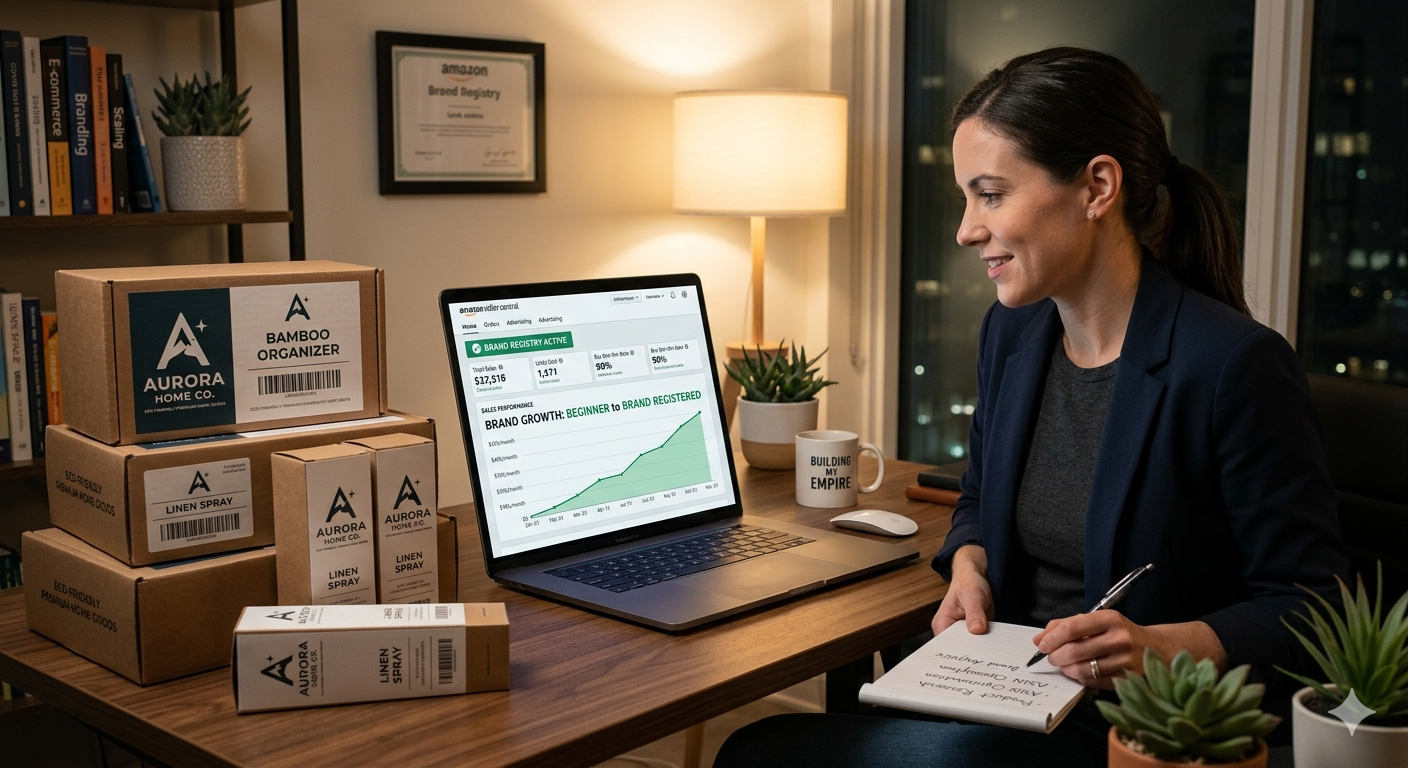
Starting your journey on Amazon may feel overwhelming at first, but with the right roadmap, it becomes a clear and achievable process. In this Amazon Seller Launch Guide 2026, you’ve seen how the transformation happens—from a complete beginner, to an active seller, and finally to a brand owner with a protected and scalable business.
However, success on Amazon is not about quick wins or shortcuts. It’s about building a strong foundation—choosing the right product, optimizing your listings, and securing your brand through trademarks and Brand Registry. In fact, the sellers who focus on long-term growth are the ones who survive and thrive in 2026 and beyond.
Therefore, instead of overthinking or waiting for the “perfect time,” start taking action step by step. Set up your account, validate your product idea, and begin building your brand today.
Remember, every successful Amazon brand started exactly where you are right now. The only difference is—they took action.