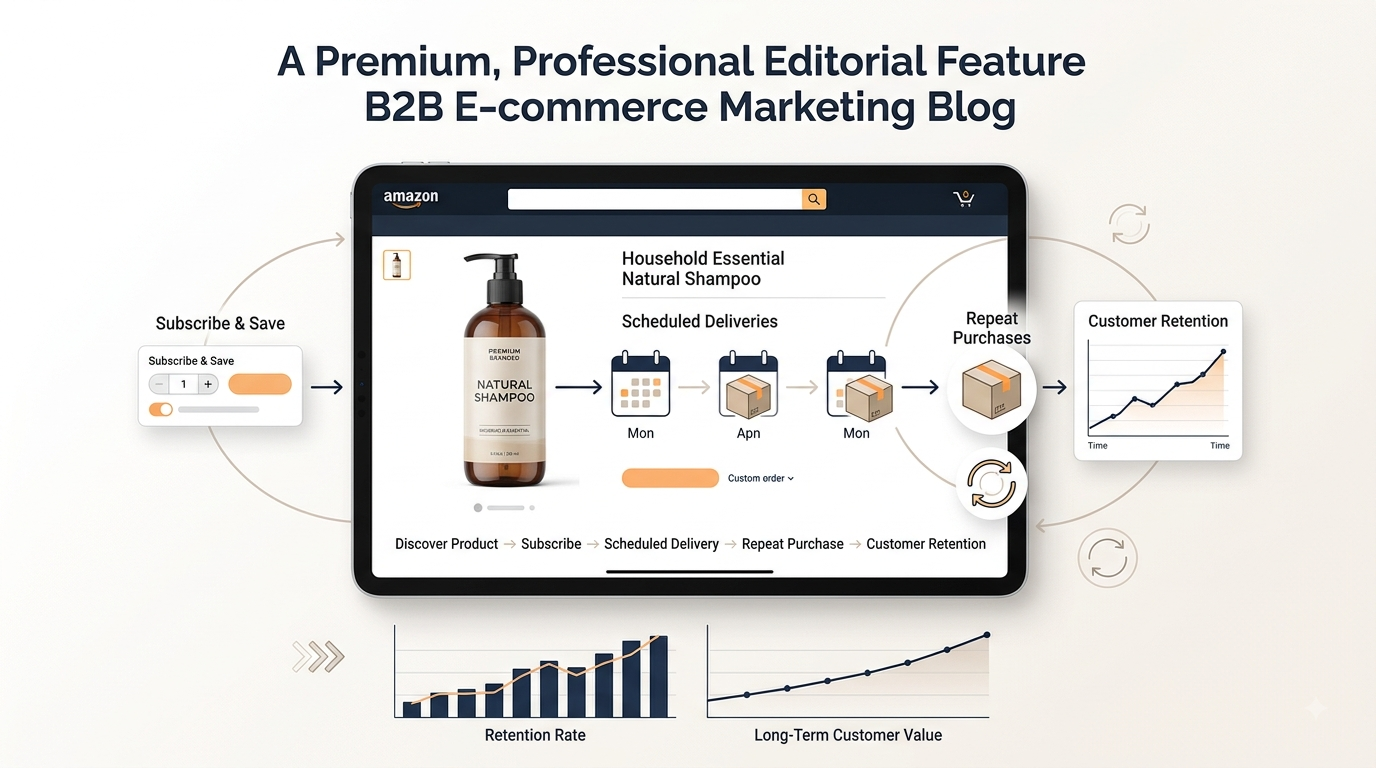

How Smart FBA Sellers Turn One-Time Buyers Into Monthly Revenue
Introduction: The Hidden Revenue Engine Most Sellers Ignore
In 2026, Amazon FBA sellers are operating in one of the toughest environments yet. Rising CPCs, aggressive competition, and shrinking margins have made it harder than ever to rely purely on product launches and ads for growth. What worked a few years ago—scaling with PPC and discounts—now feels risky, expensive, and unpredictable.
The biggest problem? Most sellers still depend on one-time buyers.
A one-time buyer purchases once, disappears, and forces you to pay again—through ads—to replace them. A repeat customer, on the other hand, compounds revenue. One buyer ordering every month for six months is often worth more than three new customers acquired through ads. Yet most sellers never build systems to encourage repeat purchases.
This is where Amazon Subscribe & Save in 2026 quietly changes the game.
Many sellers treat Subscribe & Save as just another checkbox or discount feature. That’s a mistake. When used correctly, it’s a retention system—one that turns unpredictable sales into recurring revenue, improves lifetime value, and reduces dependency on ads over time.
That said, Subscribe & Save isn’t magic. Used incorrectly, it can destroy margins and create inventory chaos. Used strategically, it becomes one of the most powerful tools Amazon offers FBA sellers to build predictable monthly revenue.
In this guide, we’ll break down how smart sellers use Subscribe & Save—not blindly, but profitably.
What Is Amazon Subscribe & Save & How It Works in 2026
Amazon Subscribe & Save is a program that allows customers to receive eligible products on a recurring schedule—monthly, bi-monthly, or at custom intervals—without placing a new order every time. In simple terms, it turns a one-time purchase into an automatic repeat order.
Here’s how it works in plain English:
A customer clicks “Subscribe & Save” instead of “Buy Now,” selects a delivery frequency, and Amazon handles the rest. The product is shipped automatically, payment is charged each cycle, and the customer can pause, skip, or cancel anytime. This flexibility is exactly why customers trust and adopt subscriptions more in 2026.
How Discounts Work in Subscribe & Save
To encourage subscriptions, Amazon offers discounts—usually between 5% and 15%. These discounts come from two sources:
- Amazon-funded discounts: Amazon absorbs part of the discount to push subscription adoption. Sellers benefit without losing margin.
- Seller-funded discounts: The seller funds the discount to make the offer more attractive. This must be planned carefully to avoid margin erosion.
Smart sellers combine both instead of blindly offering the maximum discount.
Why Amazon Pushes Subscription Products
In 2026, Amazon strongly favors subscription-based products because they increase customer lifetime value, improve demand predictability, and stabilize the platform’s revenue. As a result, subscription products often see better visibility, higher retention, and more consistent sales—when executed correctly.
Subscribe & Save isn’t about discounts. It’s about predictable demand and long-term revenue control.
Why Subscribe & Save Matters More Than Ever in 2026
Predictable Revenue and Cash Flow Stability
For Amazon FBA sellers in 2026, unpredictability is the real enemy. Sales spikes followed by dry weeks make it difficult to plan cash flow, inventory, and ad budgets. Amazon Subscribe & Save helps smooth this volatility by creating predictable monthly revenue. When customers subscribe, you’re no longer guessing future demand—you can forecast it. This consistency improves cash flow stability, making it easier to reinvest in inventory, optimize pricing, and scale without constant financial stress.
Instead of chasing sales every month, subscriptions allow revenue to compound naturally.
Smarter Inventory Planning and Operational Control
One of the most underrated benefits of Subscribe & Save is better inventory planning. Subscription orders give sellers early visibility into upcoming demand, reducing the risk of overstocking or sudden stockouts. In 2026, where storage fees and supply chain delays still impact margins, this predictability is a competitive advantage.
With subscription data, sellers can plan production cycles more accurately, negotiate better supplier terms, and avoid emergency restocks that eat into profits.
Higher LTV, Lower Ad Dependence, and Algorithm Benefits
Repeat customers dramatically increase customer lifetime value (LTV). A subscriber who orders every month is worth multiple one-time buyers acquired through ads. Over time, this reduces dependence on aggressive PPC spending and rising CPCs.
From an algorithm perspective, Amazon rewards consistent repeat purchases. Products with strong subscription activity signal reliability, demand stability, and customer satisfaction—often leading to better organic visibility.
In 2026, Subscribe & Save isn’t optional. It’s a strategic advantage for sellers who want control, not chaos.
Which Products Actually Work for Subscribe & Save
Best-Fit Product Types for Subscriptions
Not every product is built for subscriptions. Amazon Subscribe & Save works best with items customers naturally reorder without thinking. The strongest performers are consumables and replenishable products—items that run out and need replacing on a predictable cycle.
In 2026, the most reliable categories include health and wellness, pet supplies, and household essentials. Think supplements, protein powders, pet food, cleaning products, and personal care items. These products fit naturally into a customer’s routine, making subscription enrollment an easy decision.
Consistency is key. Products with clear usage cycles—monthly or bi-monthly—see higher retention and lower cancellation rates. From a seller perspective, medium-to-high margin SKUs perform best. Subscriptions involve discounts, so products with enough margin buffer can absorb those discounts without hurting profitability.
When structured correctly, these products help FBA sellers build stable recurring revenue while improving demand forecasting and inventory planning.
Products That Should Avoid Subscribe & Save
Some products simply don’t belong in Subscribe & Save—and forcing them in can destroy margins. Seasonal or trend-based items struggle because demand isn’t consistent year-round. Customers cancel once the season ends, breaking the subscription cycle.
Low-margin products are another red flag. Even small discounts can push these SKUs into unprofitability. Similarly, high-return or fragile products increase operational risk when shipped repeatedly, leading to higher costs and negative customer experiences.
Finally, avoid one-time or long replacement-cycle products like electronics, furniture, or durable goods. These items don’t align with subscription behavior and rarely generate meaningful recurring revenue.
In short, if customers don’t naturally rebuy it, Subscribe & Save isn’t the right strategy.
Step-by-Step: How to Set Up Subscribe & Save Correctly
Eligibility and Enabling Subscribe & Save
Before setting up Amazon Subscribe & Save, your product must meet basic eligibility requirements. In 2026, this typically includes being FBA-fulfilled, having consistent sales history, competitive pricing, and enough inventory to support recurring orders. New or unstable listings are usually not approved immediately.
Once eligible, go to Amazon Seller Central, navigate to the Subscribe & Save section, and enable the program at the ASIN level. The setup itself is simple—but strategy is where most sellers fail.
Choosing Discounts and Protecting Margins
After activation, you’ll choose your initial discount level, usually starting at 5%. This is where restraint matters. Many sellers jump straight to 15%, killing margins before subscriptions even stabilize.
A safer approach is to layer discounts:
- Start with the minimum seller-funded discount
- Let Amazon-funded discounts do the heavy lifting
- Increase only after retention data confirms profitability
When setting seller-funded discounts, always calculate margins post-discount, post-fees, and post-PPC. If the math doesn’t work, the subscription won’t scale sustainably.
What Happens After Activation
Once Subscribe & Save goes live, customers can begin enrolling immediately. In the first 30–60 days, expect low volume but valuable data—subscription rate, cancellations, and reorder frequency.
Over time, Amazon may increase visibility if the program performs well. Successful setups typically show meaningful traction within 60–90 days, not overnight.
Subscribe & Save rewards patience, not aggressive discounting.
Discount Strategy: How to Grow Subscriptions Without Killing Margins
Why Over-Discounting Is the Fastest Way to Lose Money
The most common mistake sellers make with Amazon Subscribe & Save is assuming higher discounts automatically mean more subscriptions. In reality, over-discounting attracts price-sensitive customers who cancel quickly and destroy margins. A 15% discount might boost sign-ups short term, but if the customer cancels after one delivery, you’ve simply sold a discounted one-time order.
In 2026, margin protection matters more than vanity subscription numbers.
Ideal Discount Ranges and Simple Profit Math
For most FBA sellers, the ideal discount range is:
- 5%–10% total for initial setup
- Lean more on Amazon-funded discounts where possible
- Increase seller-funded discounts only after data confirms retention
Here’s a simple example:
A one-time order gives you ₹1,000 profit.
A subscription order gives you ₹850 profit after discounts—but repeats for six months.
That’s ₹5,100 total profit from one subscriber versus ₹1,000 from a single purchase. This is why Amazon Subscribe & Save in 2026 works when retention is real.
Adjusting Discounts Without Hurting Profitability
Discounts should be dynamic, not fixed. Raise discounts if subscription enrollment is low but retention is strong. Lower them if cancellations spike after the first delivery.
The goal is balance:
- Enough incentive to convert
- Enough margin to scale profitably
Amazon rewards sustainable subscriptions—not aggressive discounting. In Subscribe & Save, long-term profitability always beats short-term volume
Inventory & Cash Flow Planning for Subscription Orders
Why Subscription Inventory Requires a Different Approach
Inventory planning for Amazon Subscribe & Save is fundamentally different from planning for one-time purchases. Subscription orders are commitments, not guesses. When customers subscribe, Amazon expects consistent fulfillment. Stockouts don’t just pause sales—they cancel subscriptions, and once lost, those customers rarely come back.
In 2026, inventory mistakes hurt more because fees are higher and competition is tighter.
Forecasting Repeat Orders and Preventing Stockouts
Subscription data gives sellers an edge. Once subscriptions stabilize, you can forecast repeat orders with far more accuracy than regular sales. Look at active subscriber counts, delivery frequency, and churn rate to estimate future demand.
To prevent stockouts:
- Always separate subscription demand from regular sales demand
- Add buffer inventory for upcoming subscription cycles
- Plan reorders earlier than usual
Reorder points should be based on worst-case lead times, not average ones. Even a short delay can trigger canceled subscriptions that permanently reduce recurring revenue.
Cash Flow Advantages of Predictable Demand
One of the biggest benefits of Subscribe & Save is cash flow predictability. Knowing how much inventory you’ll sell next month allows better budgeting, supplier negotiations, and ad planning.
With stable subscription revenue, sellers rely less on aggressive PPC to “force” sales. Amazon rewards this consistency with long-term platform stability—while sellers gain control instead of reacting to chaos.
Optimizing Your Listing for Subscribe & Save
How Buyers Decide to Subscribe
Customers don’t subscribe just because a checkbox exists. They subscribe when the product clearly fits a repeat-use habit. In 2026, buyers look for reassurance: Will I need this again? How often? Is it reliable? Your listing must answer these questions before they ever scroll to pricing.
If your listing screams “one-time purchase,” subscriptions won’t convert.
Subscription-Focused Titles, Bullets, and A+ Content
Your title and bullet points should subtly reinforce ongoing usage, not urgency. Highlight benefits like “monthly supply,” “never run out,” or “designed for regular use.” This frames the product as part of a routine, not a one-off buy.
A+ Content is where subscriptions really win. Use it to explain:
- How long the product lasts
- Why customers reorder it
- How Subscribe & Save simplifies their life
Visual timelines, usage cycles, and comparison charts work especially well here.
Images and FAQs That Reduce Hesitation
Images should reinforce monthly usage—for example, “30-day supply,” “one pack per month,” or a visual showing repeat deliveries. These cues normalize subscriptions without forcing them.
Finally, use listing FAQs to remove friction:
- Can I cancel anytime?
- Will the price change?
- How often will it arrive?
Clear answers build trust. When buyers feel in control, Subscribe & Save conversions increase—without extra discounts.
Using Amazon Ads to Fuel Subscription Growth
How PPC Helps Acquire Subscribers
Amazon Ads play a supporting role in growing Amazon Subscribe & Save, not the entire strategy. PPC is most effective at introducing your product to first-time buyers who are already inclined toward repeat purchases. The goal isn’t just a conversion—it’s a subscription-enabled conversion that pays off over time.
In 2026, using ads purely for one-time sales is expensive. Using them to acquire long-term subscribers is far more sustainable.
Best Campaign Types and Keyword Intent
The best-performing campaign types for Subscribe & Save are:
- Sponsored Products (exact and phrase match)
- Brand campaigns that educate before selling
Focus on repeat-buy intent keywords—terms that imply ongoing use, refills, or long-term need. These keywords attract customers who naturally align with subscriptions rather than impulse buyers.
Avoid broad, discount-driven keywords that attract deal hunters who cancel after one delivery.
Measuring Ads by LTV, Not Just ROAS
Traditional ROAS can be misleading for subscriptions. A campaign that looks unprofitable on first purchase may be extremely profitable over six months. This is why customer lifetime value (LTV) matters more than short-term returns.
If the math works across multiple deliveries, the ad is doing its job.
When Ads Make Sense—and When They Don’t
Ads make sense when margins can support delayed profitability and retention is strong. They don’t make sense when subscriptions churn quickly or discounts eat all profit. Amazon rewards sellers who think long-term—not those chasing instant ROAS.
Common Subscribe & Save Mistakes Sellers Make
Strategic and Operational Errors to Avoid
One of the biggest mistakes sellers make with Amazon Subscribe & Save is enabling it on every SKU. Not all products are meant for subscriptions, and forcing the model on the wrong items leads to low retention and unnecessary margin loss. Subscribe & Save works best when applied selectively to products with natural repeat demand.
Another critical error is ignoring margin impact. Sellers often focus on subscription growth without fully accounting for discounts, fees, and ad costs. Without clear profit math, subscriptions can quietly drain cash instead of building recurring revenue.
Execution Gaps That Kill Long-Term Growth
Poor inventory management is a silent killer. Stockouts don’t just pause sales—they cancel subscriptions permanently. Many sellers fail to separate subscription demand from regular sales, leading to avoidable churn.
Equally damaging is not monitoring cancellations. Churn data reveals pricing issues, product-market fit problems, and discount misalignment. Ignoring it means flying blind.
Finally, treating Subscribe & Save as passive income is a mistake. It’s not “set and forget.” In 2026, Amazon rewards sellers who actively manage pricing, inventory, and retention—not those who hope subscriptions run themselves.
Realistic Expectations: What Results Look Like
What to Expect in the First 30–60–90 Days
Subscribe & Save is a long-game strategy, not an overnight win. In the first 30 days, most sellers see low enrollment but valuable signals—who subscribes, at what discount, and how often they cancel. This phase is about data, not revenue.
By 60 days, patterns start forming. Subscription counts slowly increase, and retention data becomes clearer. Sellers who monitor churn and adjust discounts here see the best outcomes.
At 90 days, optimized listings and stable inventory typically show consistent subscription growth. The key balance is retention over acquisition—a few loyal subscribers are more valuable than many short-term ones.
Patience matters because sustainable recurring revenue compounds over time. Rushing the process usually leads to margin damage.
2026 Trends & What Smart Sellers Are Doing Differently
How Subscribe & Save Is Evolving in 2026
In 2026, Amazon is clearly prioritizing customer retention over constant acquisition. Subscription products help Amazon predict demand, stabilize revenue, and improve customer experience—so they’re rewarded accordingly.
Smart sellers are noticing increased visibility for well-optimized subscription listings. At the same time, rising competition is forcing sellers to be more strategic with pricing, inventory, and discounts.
The biggest shift? Early optimization. Sellers who fine-tune Subscribe & Save settings from day one—rather than fixing mistakes later—build stronger retention and protect margins. In a crowded marketplace, those who optimize early don’t just compete better—they compound faster.
Actionable Subscribe & Save Checklist
Quick Execution Checklist for Sellers
Before enabling Amazon Subscribe & Save, confirm your product has natural repeat demand and fits subscription behavior. Run a margin safety check to ensure discounts won’t push the SKU into loss after fees and ads. Make sure inventory levels can support recurring orders without risking stockouts or canceled subscriptions.
Review your listing with a subscription lens—titles, bullets, images, and A+ Content should reinforce repeat usage. After launch, monitor performance monthly. Track subscription growth, cancellations, and profitability, and adjust discounts or inventory planning based on real data, not assumptions.
A simple checklist prevents expensive mistakes.
Conclusion: Build Stability, Not Just Sales
In 2026, surviving on launches and ads alone is risky for Amazon FBA sellers. Amazon Subscribe & Save offers something far more valuable than short-term spikes—stability. Predictable revenue, higher customer lifetime value, better inventory planning, and reduced ad dependence all come from building retention, not chasing one-time buyers.
Subscribe & Save works best as part of a sustainable FBA system, alongside smart pricing, inventory discipline, and thoughtful advertising. It’s not a magic switch—but when tested and optimized strategically, it compounds over time.
The sellers who win aren’t the ones who enable it everywhere. They’re the ones who test carefully, protect margins, and think long-term—exactly how Amazon rewards growth in 2026.